
Australia's Housing Shortfall: How Data Analytics Can Guide Your Property Search
With a national housing deficit of over 220,000 homes, learn how to leverage powerful data tools to navigate the competitive Australian property market and make smarter investment decisions.
 Jasmine Amari
The Challenge: A Critical Housing Shortage
Navigating the Australian property market in 2025 feels more challenging than ever, and for good reason. Recent industry analysis, including reports from Q3 2025, confirms what many aspiring homeowners and renters are experiencing firsthand: record-low housing affordability. At the heart of this issue is a significant structural imbalance between supply and demand, which has culminated in a national housing shortage estimated to be as high as 220,000 homes.
Understanding the Root Cause
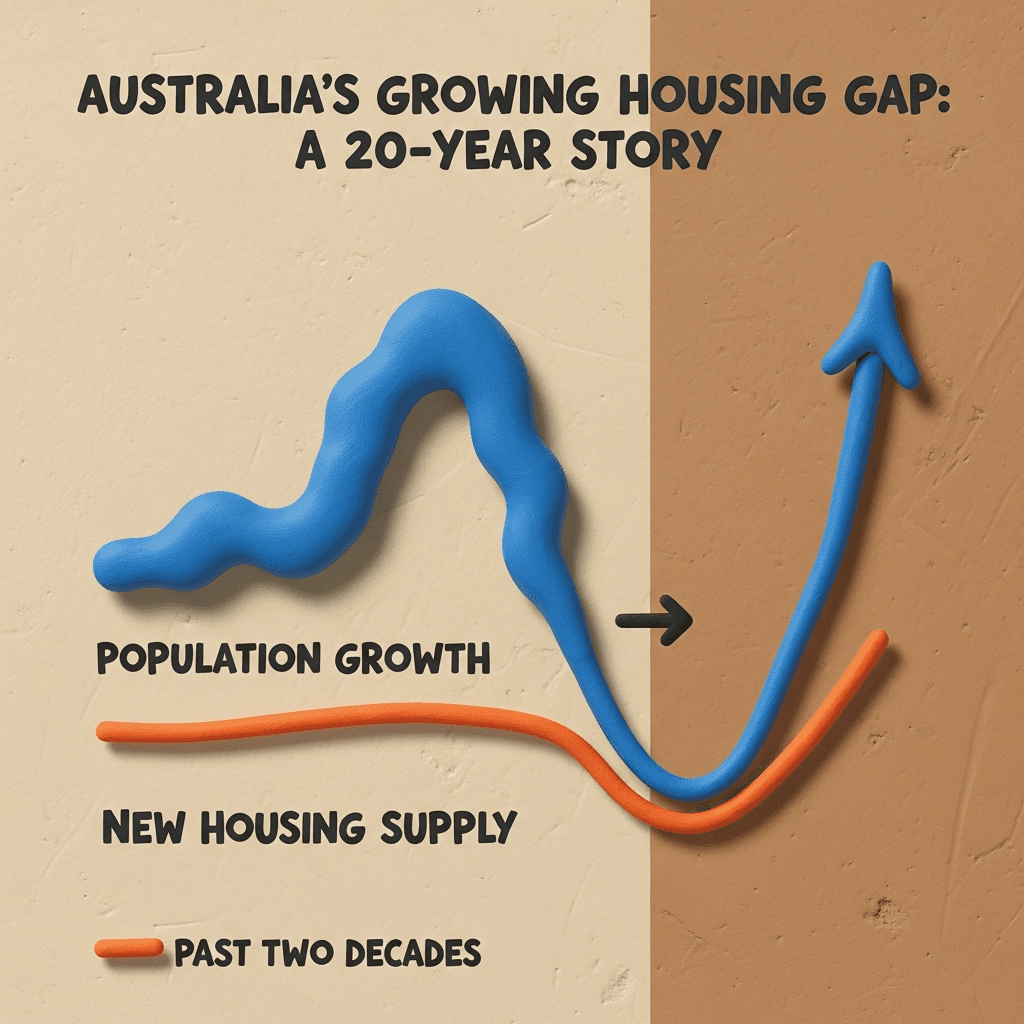
This isn't an overnight problem. According to leading economists like AMP's Shane Oliver, the seeds of today's market were sown in the mid-2000s. A significant increase in Australia's annual population growth outpaced the rate of new housing construction. This long-term trend has created a persistent deficit, meaning more people are competing for fewer available properties. This fundamental undersupply puts continuous upward pressure on both property prices and rental costs, making it crucial for buyers to be more strategic than ever.
Gaining a Competitive Edge with Data
In a market defined by scarcity, relying on basic property listings is not enough. The key to success lies in deep market intelligence. This is where leveraging comprehensive real estate analytics becomes a game-changer. By analysing suburb-level data, historical growth trends, and supply pipelines, you can uncover opportunities that others miss. Understanding the metrics behind the headlines allows you to identify areas with strong long-term potential, rather than just focusing on today's popular hotspots.
From Insight to Action: Smarter Property Discovery
Once you have a data-driven strategy, you need the right tools to execute it. Instead of endless scrolling, an AI-powered property search allows you to find homes that match your specific financial and lifestyle criteria with incredible precision. For those seeking a more guided experience, services like an AI Buyer's Agent can provide personalised recommendations based on your unique profile, helping you navigate the complexities of the buying process from start to finish.
Conclusion
The Australian property market's structural housing shortage presents a significant hurdle for buyers. However, it's a challenge that can be overcome with the right approach. By shifting from a passive search to a proactive, data-informed strategy, you can cut through the noise, identify genuine opportunities, and make confident decisions. Leveraging technology and in-depth analytics is no longer a luxury—it's an essential toolkit for success in today's competitive landscape.
Ready to turn market challenges into opportunities? Explore HouseSeeker's Real Estate Analytics Hub to uncover the insights you need for your next property purchase.
Frequently Asked Questions
Why is housing so unaffordable in Australia?
Australia's housing affordability crisis is primarily driven by a long-term structural shortage of homes. For nearly two decades, population growth has outpaced new housing construction, creating a significant supply-demand imbalance that pushes prices and rents higher.
How can technology help me find a property in such a competitive market?
Technology provides a crucial advantage. Tools like HouseSeeker's AI Property Search help you filter properties based on complex lifestyle and investment criteria, while our Data Analytics Hub offers the deep market insights needed to identify suburbs with the best potential before they become mainstream.
What are the most important data points for property investors right now?
In a tight market, investors should look beyond the median price. Key data points include historical capital growth rates, current rental yields, vacancy rates (a low rate indicates strong rental demand), and future development pipelines in the area, which can indicate future supply changes.