
The Land Value Boom: What's Really Driving Australian Property Prices?
Discover why the value of land, not just the house on it, is the key to understanding the housing market and making smarter investment decisions.
 Jasmine Amari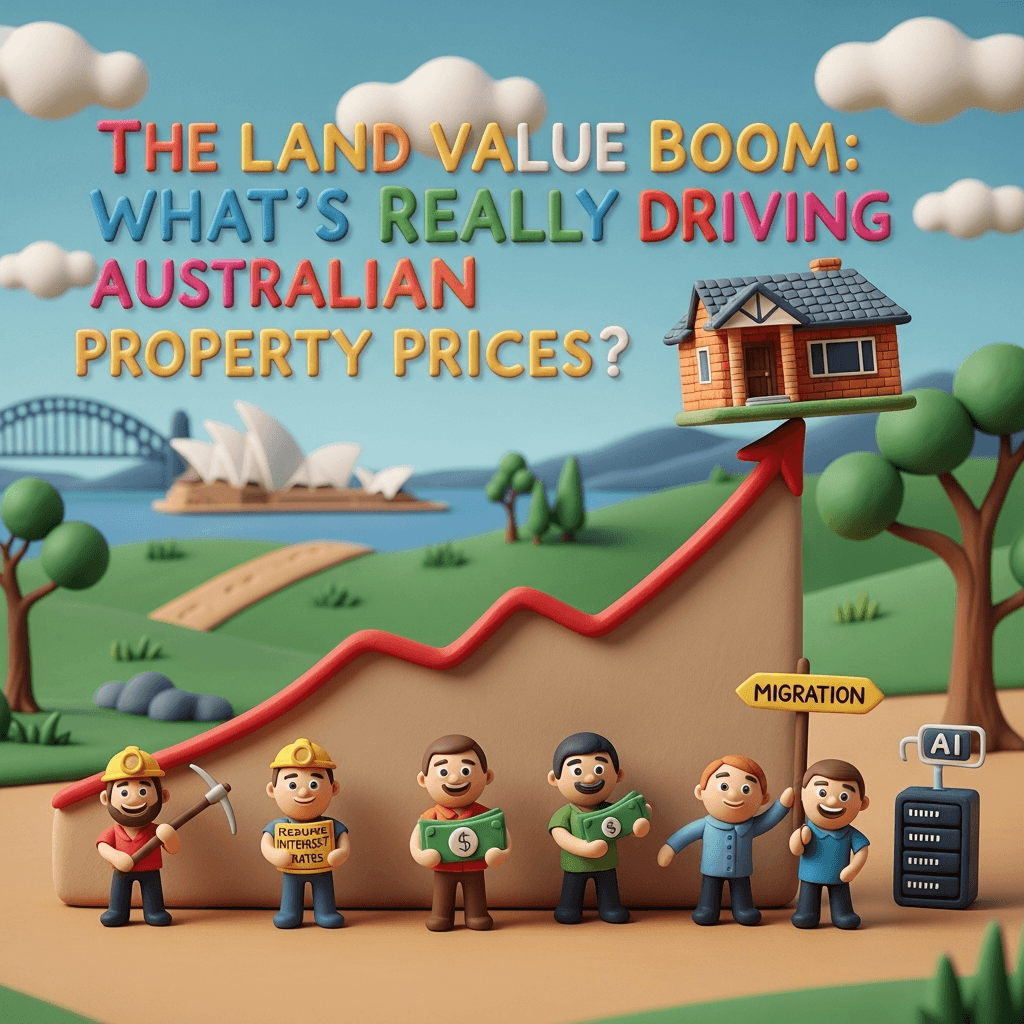
Introduction
Navigating Australia's property market can feel overwhelming, with headlines constantly focused on soaring house prices. However, to truly understand the affordability challenge and identify smart opportunities, you need to look beneath the surface—literally. The real story isn't just about houses; it's about the land they're built on. Recent data reveals that a 'land bubble' is the primary driver behind the high cost of Australian real estate, fundamentally reshaping the market for buyers and investors.
The Shift: Land Now Dominates Property Value
According to the Australian Bureau of Statistics (ABS), the total value of residential land in Australia has surged to a record $8.3 trillion. To put that in perspective, the value of residential land has skyrocketed from 1.1 times the nation's GDP in 1989 to a staggering 3.0 times GDP today. This dramatic shift means that land now accounts for approximately 75% of an average property's total value, a significant increase from 54% three decades ago. For the modern Australian buyer, this means you are investing more in the location and the plot than in the physical structure of the home itself.
[INSERT_IMAGE: { "prompt": "A modern infographic showing a house silhouette, with 75% of it shaded and labelled 'Land Value' and 25% labelled 'Building Value'.", "alt": "The value of residential land in Australia has grown to represent 75% of a property's total worth, a significant increase from previous decades, shifting the focus of property investment towards land. " }]
The Squeeze on Supply and Price
Data from Cotality and the Housing Industry Association (HIA) highlights a critical trend: the cost of vacant land is rising dramatically. In the last financial year alone, median lot values increased by 6.8% nationally. Over the past decade, this trend has been even more pronounced across Australia's capital cities. For instance, Sydney saw median lot prices jump by 115.0%, while Melbourne experienced a 108.8% rise. Compounding this issue is the fact that as prices have climbed, the average block size has shrunk, causing the price per square metre to inflate even faster. This hyperinflation in land costs creates a major barrier to the construction of new, affordable homes.
[INSERT_IMAGE: { "prompt": "A line graph showing a steep upward trend for 'Lot Prices in Australian Capital Cities' over the last 10 years, with a contrasting, less steep line for 'Average Wage Growth'.", "alt": "Median lot prices in Australian capital cities have surged over the past decade, with Sydney and Melbourne seeing increases over 100%, far outpacing wage growth and impacting housing affordability." }]
Key Drivers and What They Mean For You
Strong population growth has been a significant factor driving up demand for housing. When high demand meets a limited supply of well-located land, prices inevitably rise. This dynamic has shifted the supply curve, making it more expensive to deliver new dwellings at all price points. For prospective buyers, this environment makes it more crucial than ever to approach the market with a data-driven strategy. Understanding the underlying land value trends in different suburbs can mean the difference between a sound investment and an overpriced purchase.
This is where leveraging technology becomes a game-changer. Instead of manual research, you can use powerful platforms to analyse market dynamics. HouseSeeker's real estate analytics hub provides the deep insights needed to compare suburbs based on capital growth, land value trends, and more. To cut through the noise, an AI-powered property search can help you find homes that match your unique lifestyle and financial goals. For a fully guided experience, our AI Buyer's Agent translates complex market data into personalised, actionable recommendations.
Conclusion
The Australian housing market is fundamentally a land market. The soaring cost of land is the central factor influencing property prices and affordability. For buyers, this reality underscores the need for a sophisticated approach. By focusing on data, understanding long-term trends, and utilising advanced tools, you can navigate these challenges and make informed decisions that align with your property goals.
Ready to dive deeper and make data-backed property decisions? Explore the powerful insights on HouseSeeker's Real Estate Analytics Hub today.
Frequently Asked Questions
Why is land so expensive in Australia?
Land prices in Australia are driven by a combination of high demand, fuelled by consistent population growth, and a limited supply of zoned residential land in desirable urban and coastal areas. This classic supply-and-demand imbalance pushes values upward.
How does high land value impact my home loan?
High land value contributes significantly to the overall purchase price of a property, which means you may need a larger home loan. Lenders assess the total value (land + building), so a property with a high land value component in a prime location is often seen as a secure asset.
How can I find good value in a market with high land costs?
Finding value requires a strategic approach. This can include looking at emerging suburbs where land values have yet to peak, considering different property types like townhouses or apartments, or using advanced data tools like HouseSeeker's real estate analytics platform to identify undervalued areas with strong future growth potential.