
Australia's Housing Crisis: Is It Really Just a Supply Problem?
While the national conversation focuses on building more homes, savvy buyers are using data to understand the powerful demand-side factors truly shaping the market.
 Jasmine Amari
The National Debate: A One-Sided Conversation?
Recent discussions, like those at the Financial Review property summit, consistently circle back to one proposed solution for Australia's housing affordability crisis: increase supply. Industry leaders and policymakers alike champion the urgency of building more homes to meet overwhelming demand. While constructing more dwellings is undoubtedly a crucial part of the long-term solution, focusing solely on supply overlooks the complex and powerful forces driving demand—factors that investors and homebuyers can analyse to gain a significant advantage.
The Unwavering Focus on Housing Supply
The argument for increasing supply is straightforward. Australia's population is growing, and a fundamental mismatch between the number of available homes and the number of people needing them drives prices up. Government bodies and organisations like the Property Council of Australia rightly point out that zoning reforms, faster development approvals, and ambitious building targets are essential to ease pressure on the market over the coming decade. This supply-side focus aims to create a more balanced market where competition among buyers is less fierce.

The Other Side of the Coin: Unpacking Demand Drivers
Focusing only on construction ignores the immediate and potent factors that fuel housing demand. These elements often have a more direct impact on property values in the short to medium term. For savvy buyers, understanding these drivers is the key to identifying high-growth opportunities.
Key demand-side factors include:
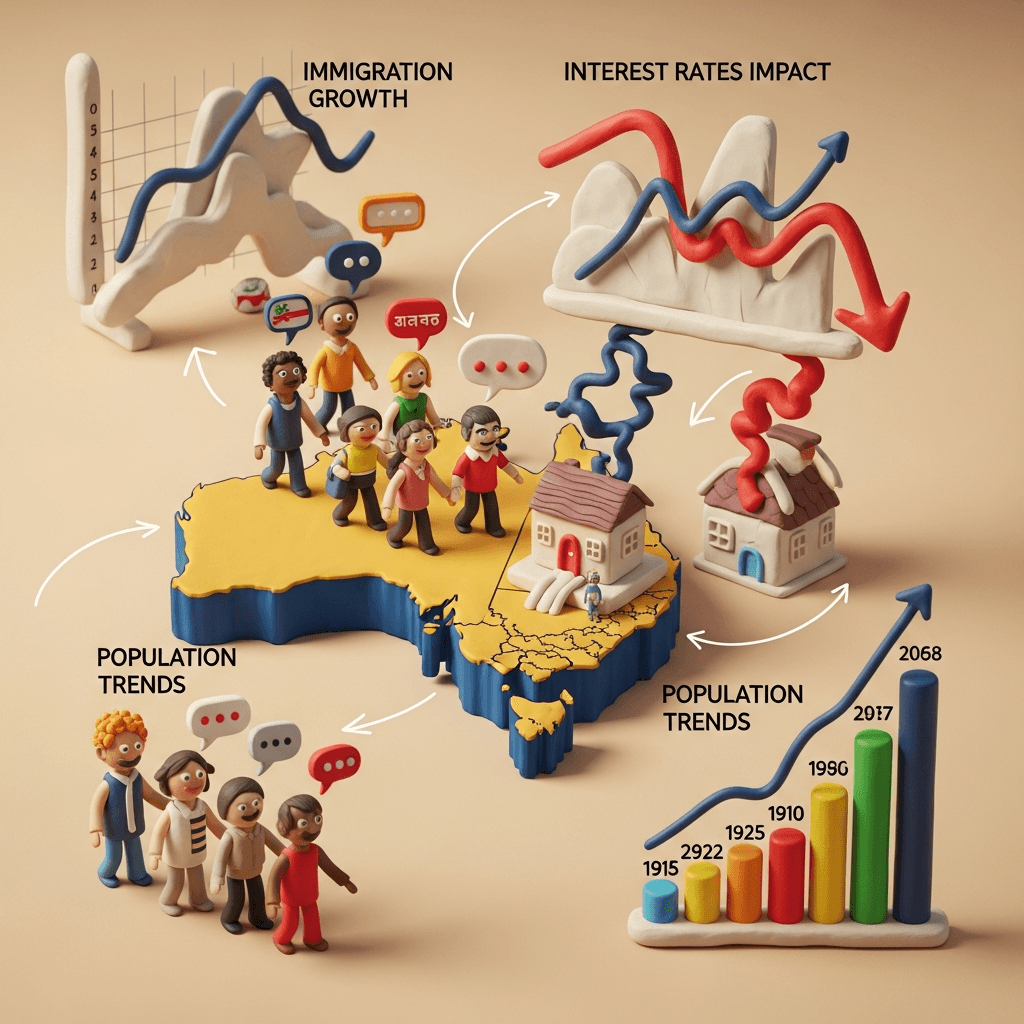
Population Growth: Record levels of net overseas migration directly translate to increased demand for housing, particularly in major capital cities.
Economic Levers: Interest rates set by the RBA fundamentally alter borrowing capacity. Lower rates can supercharge demand, while higher rates can temper it.
Government Incentives: Policies like First Home Owner Grants, stamp duty concessions, and negative gearing create surges of demand from specific buyer demographics.
Demographic Shifts: A long-term trend towards smaller household sizes means that even without population growth, more individual dwellings are required to house the same number of people.
Using Data to Navigate a Complex Market
While you can't control national housing policy, you can control your investment strategy. Instead of getting lost in the broad supply-side debate, you can use technology to analyse demand at a granular level. This is where you can turn market complexity into your strategic advantage. By leveraging sophisticated tools, you can pinpoint suburbs where demand is consistently outpacing supply.
Understanding market dynamics begins with the right data. The HouseSeeker Real Estate Analytics Hub empowers you to dive deep into suburb-level statistics, tracking metrics like auction clearance rates, rental yields, and days on market to gauge real-time demand. Once you identify a high-demand area, you can use our AI-powered property search to find homes that match specific lifestyle needs, like proximity to top-rated schools or transport links—the very features that drive local demand. For a guided experience, our AI Buyer's Agent can synthesise this data to provide personalised recommendations tailored to your goals.
Conclusion
Australia's housing crisis is a multifaceted issue where both supply and demand play critical roles. While the long-term solution will inevitably involve building more homes, the most successful property buyers and investors are those who look beyond the headlines. By focusing on understanding and tracking the powerful drivers of demand, you can make informed, data-driven decisions that position you for success in any market cycle.
Ready to look beyond the headlines and make a truly data-driven property decision? Explore the powerful insights on the HouseSeeker Real Estate Analytics Hub and gain your competitive edge today.
Frequently Asked Questions
Is building more houses the only real solution to the housing crisis?
While increasing supply is a critical long-term strategy for improving overall affordability, it's a slow process. For buyers and investors acting now, understanding the immediate demand-side factors in a specific suburb or region is far more crucial for making a successful purchase.
What are the best data points to track for property demand?
Key indicators of strong, localised demand include consistently high auction clearance rates, low rental vacancy rates, short 'days on market' for listings, and evidence of ongoing public and private investment in local infrastructure like schools, transport, and shopping precincts.
How can AI help me find a property in a high-demand area?
AI-powered platforms can analyse millions of data points in real-time. They can identify suburbs with strong growth indicators and then filter properties within those areas based on your specific lifestyle needs—such as 'a family home near a park with a direct train line to the CBD'. This saves you hundreds of hours of manual research and helps you uncover opportunities you might have otherwise missed.