
The Vanishing Aussie Backyard: How Data Reveals Australia's Housing Shift
Urban densification is reshaping our cities. Discover the market trends driving this change and how to navigate the new property landscape with powerful analytics.
 Jasmine Amari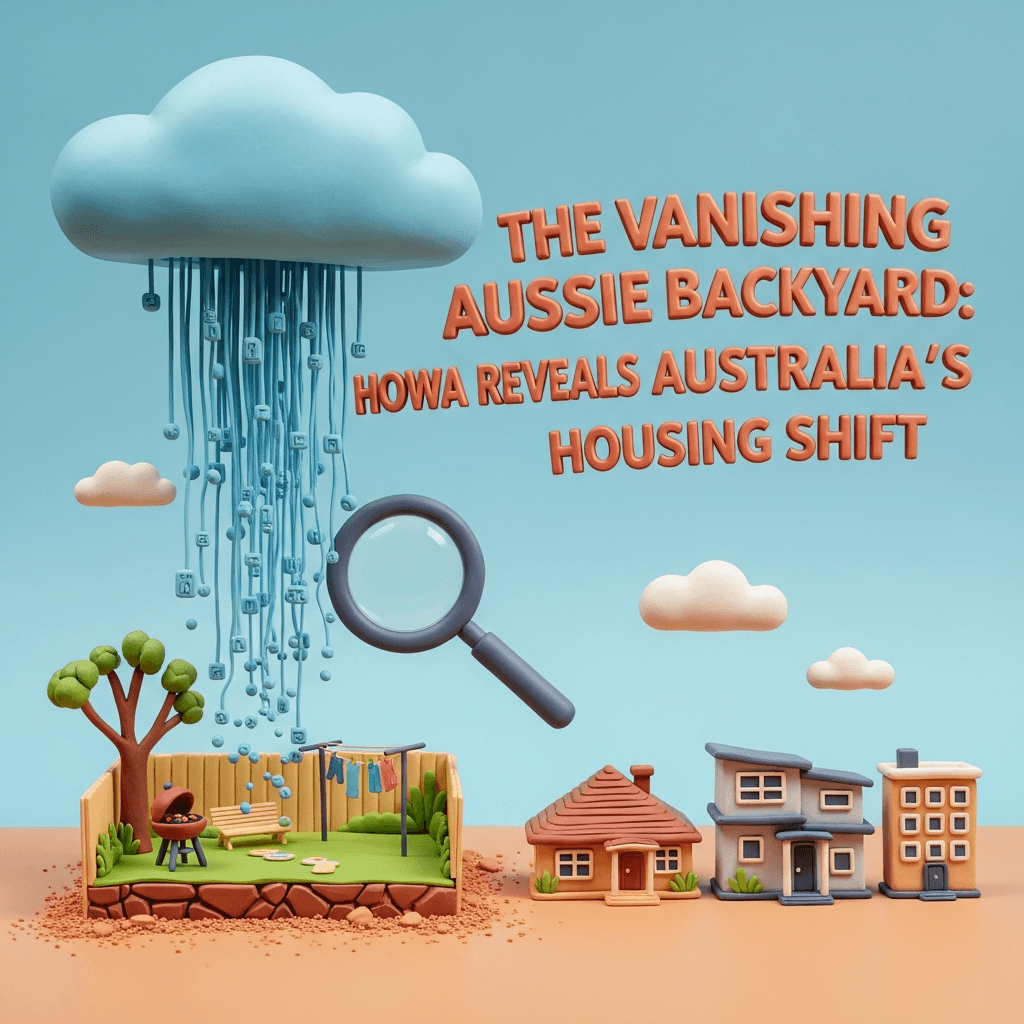
The Great Australian Dream is Changing
The classic image of a family home with a sprawling backyard is a cornerstone of the Australian identity. Yet, as broadcaster Kel Richards recently highlighted, this ideal is facing a significant challenge. A fundamental shift in our urban landscape means fewer standalone homes are being built, replaced by an ever-increasing number of high-rise apartments. This trend, often called 'the death of the backyard,' isn't just a nostalgic concern; it's a market reality with profound implications for homebuyers and investors.
A Nation of Apartments: The Data Behind the Shift
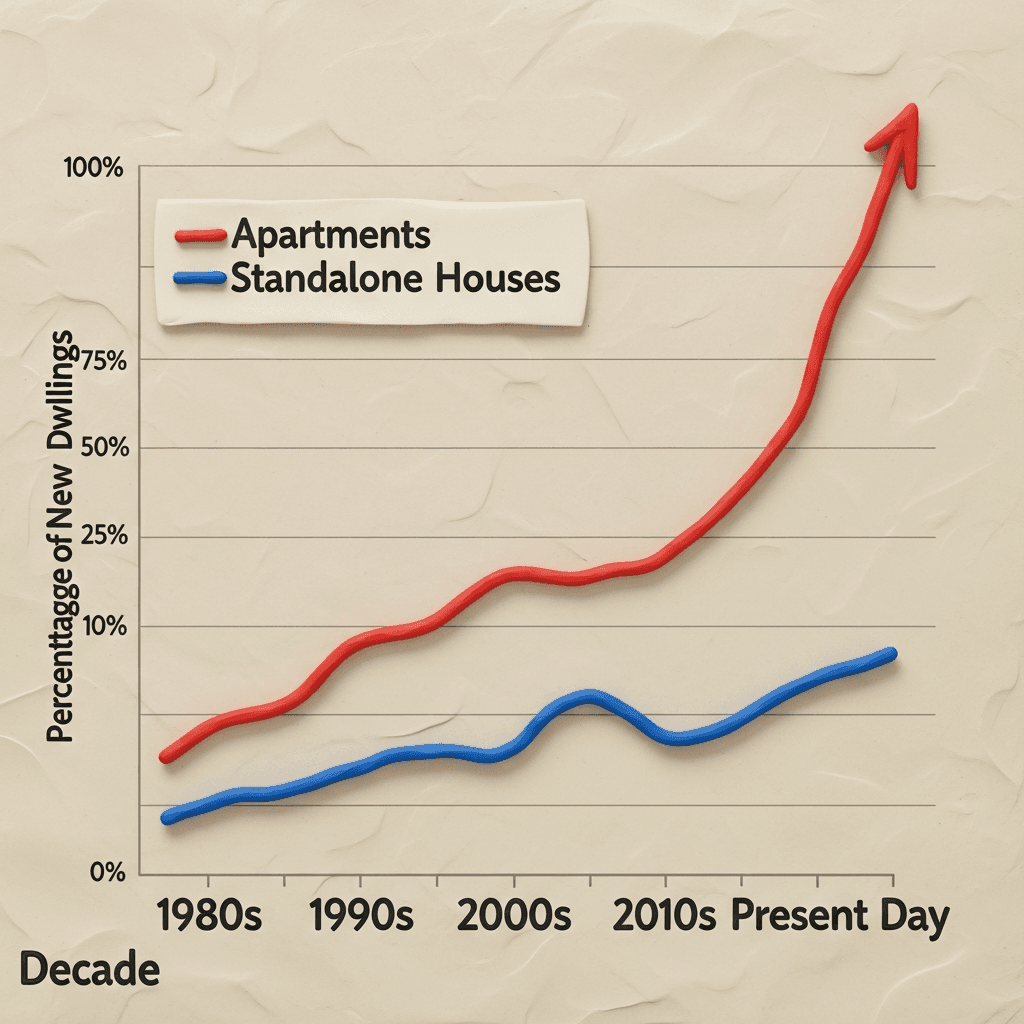
The data confirms this nationwide transformation. Over the past few decades, the proportion of new dwellings in capital cities that are units or apartments has surged dramatically. What was less than 30% in the mid-1980s soared to nearly 60% by 2016 and currently sits around 45%. This move towards higher-density living is most pronounced in the East Coast capitals, where population growth and land scarcity are most acute.
Why is the Backyard Disappearing? Key Market Forces
This structural change is primarily driven by Australia's policy of high net overseas migration, which concentrates population growth in our major cities. As millions of new residents arrive, the demand for housing skyrockets, forcing urban planners and developers to build upwards. Projections, such as those from the Urban Taskforce for Sydney, suggest the share of detached houses could plummet to as low as 25% by 2057. This ongoing densification puts constant upward pressure on property prices and rents, making land for a traditional backyard an increasingly expensive luxury. Understanding these macroeconomic trends is crucial, and tools on our Real Estate Analytics Hub provide the clarity needed to see how these forces impact specific suburbs.
What This Means for Your Property Search
For aspiring homeowners, this reality means the search for a detached house is more competitive than ever. For investors, the growing scarcity of these properties presents a potential opportunity for significant long-term capital growth. As detached houses become a premium asset, navigating the market requires a more sophisticated approach. Buyers must weigh their desire for space against the realities of urban affordability. This is where advanced tools can make a difference, helping you filter through the noise. A platform like HouseSeeker's AI Property Search allows you to search based on lifestyle needs, such as 'a home near a large park' or 'an apartment with a private courtyard,' providing alternatives when a traditional backyard is out of reach.

A Data-Driven Strategy for Today's Market
Instead of lamenting the change, savvy buyers can adapt by using data to their advantage. A data-first strategy involves identifying suburbs that still offer a supply of detached homes, analysing their growth potential, and understanding demographic shifts. Alternatively, for those embracing apartment living, analytics can pinpoint developments with superior access to green spaces, transport, and amenities. Leveraging a service like our AI Buyer's Agent can provide personalised recommendations based on this deep market intelligence, aligning your goals with the realities of the modern housing landscape.
Conclusion
The great Aussie backyard is undeniably becoming a rarer commodity, a trend cemented by population growth and urban densification. This shift is fundamentally altering the property market, making detached homes more valuable and the competition more intense. However, by embracing a data-driven approach, you can navigate these changes effectively. Understanding market analytics and using intelligent search tools are no longer just advantages—they are essential for making informed and successful property decisions in 21st-century Australia.
Ready to cut through the complexity of the modern property market? Explore HouseSeeker's Real Estate Analytics Hub to uncover trends, compare suburbs, and make data-backed decisions in your property search.
Frequently Asked Questions
Are detached houses with backyards a good investment?
Given their increasing scarcity in major urban centres, detached houses are likely to be a strong asset class for long-term capital growth. The consistent demand for land and space, coupled with a dwindling supply, creates a favourable environment for value appreciation.
How can I find a property with outdoor space if I can't afford a house?
Use advanced property search tools that allow for lifestyle-based filtering. You can search specifically for ground-floor apartments with courtyards, townhouses with gardens, or apartments with large balconies. Furthermore, you can prioritise properties located directly adjacent to parks and recreational areas to serve a similar function.
What data is most important when looking for a family home today?
Beyond price and bedroom count, focus on data points that reflect quality of life in a densifying city. Key metrics include proximity to green spaces, school catchment performance, walkability scores, access to public transport, and future infrastructure plans for the suburb. These factors are becoming increasingly critical in defining a property's long-term value and livability.